Running a commercial kitchen is not just about cooking good food. It is about speed, safety, workflow, and control. That is where modular commercial kitchens step in. Instead of building everything brick by brick and fixing mistakes later, modern food businesses now prefer structured, flexible kitchen systems that grow with them.
If you are planning a new setup or upgrading an existing one, working with an experienced Hotel Kitchen Equipment Manufacturer or a reliable Food and Beverage Consultant in Delhi can help you avoid costly errors from day one. Many restaurant owners discover this the hard way. You do not have to.
This guide explains modular commercial kitchens in simple terms. No jargon. No sales talk. Just what works and why.
What Is a Modular Commercial Kitchen?
A modular commercial kitchen is a professionally planned kitchen built using prefabricated units. These units include workstations, storage, cooking lines, washing areas, and ventilation systems. Each section fits together like building blocks.
Unlike traditional kitchens, modular kitchen design focuses on function first. Every counter, shelf, and appliance has a defined purpose. You do not add things randomly and hope they work together. Everything is planned before installation.
This approach suits restaurants, cloud kitchens, hotels, hospitals, and large cafeterias where consistency and efficiency matter more than aesthetics alone.
Also Read: Top 5 Commercial Kitchen Equipment Manufacturers in Delhi You Can Trust
Why Modular Kitchen Design Works for Commercial Spaces
Commercial kitchens operate under pressure. Orders pile up. Staff moves fast. Mistakes cost money. A well-planned modular kitchen design reduces friction during service hours.
Here is why it works so well:
- Workflows stay predictable, even during rush hours
- Staff waste less time walking or searching for tools
- Cleaning becomes faster because surfaces and layouts are standardised
- Repairs are easier since components are replaceable
Think of it like traffic management. When lanes are clear, vehicles move smoothly. When layouts are random, chaos follows.
Key Benefits of Modular Commercial Kitchens
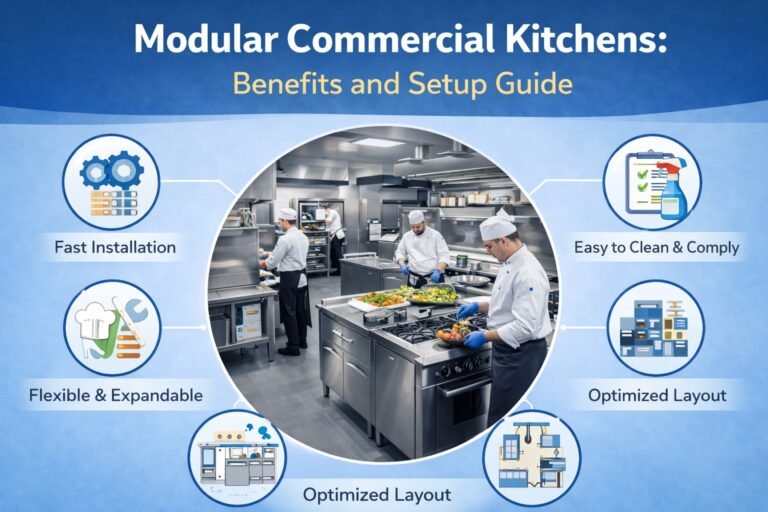
Faster Installation and Expansion
Traditional kitchens take weeks or months to build. Modular foodservice kitchens are assembled much faster because components are manufactured off-site. This reduces downtime and allows businesses to start operations sooner.
Expansion also becomes simpler. If your menu grows or seating increases, you can add new modules without tearing everything down.
Better Hygiene and Safety Control
Commercial kitchen hygiene improves significantly with modular systems. Stainless steel surfaces, sealed joints, and proper spacing reduce contamination risks.
Kitchen sanitation standards are easier to follow when cleaning staff can access every corner without obstacles. Health inspections also become less stressful when layouts follow standard guidelines.
Improved Energy and Space Efficiency
Modular kitchen equipment is designed to optimise space. Even small kitchens can support high output when layouts are smart.
Energy efficiency improves as well. Proper placement of heat-producing equipment reduces cooling load and improves ventilation performance.
Understanding the Commercial Kitchen Layout
The success of any professional kitchen depends on its layout. A commercial kitchen layout is not about looks. It is about movement, safety, and speed.
Common layout zones include:
- Receiving and storage
- Preparation
- Cooking
- Plating and service
- Washing and waste disposal
Each zone must flow logically into the next. Crossing paths between raw and cooked food areas is a common mistake in poorly planned kitchens. Modular layouts reduce this risk by design.
This is where expert guidance matters. Many businesses rely on Restrobar Kitchens through their Google My Business location to plan layouts that meet operational and compliance needs without wasting space.
Modular Kitchen Equipment: What Goes Where
Choosing modular kitchen equipment is not about buying everything available. It is about selecting what supports your menu and service style.
For example:
- Quick service restaurants need fast-heat equipment and compact prep stations
- Hotels require separate sections for bulk cooking, baking, and room service
- Cloud kitchens need flexible cooking lines that support multiple cuisines
Equipment placement should reduce unnecessary movement. If a cook takes ten extra steps per dish, that adds up over hundreds of orders.
Installation Process Explained Simply
Commercial kitchen installation follows a structured approach:
- Site assessment and workflow planning
- Equipment selection based on menu and volume
- Utility planning for gas, electricity, water, and drainage
- Fabrication of modular units
- On-site assembly and testing
Rushing this process leads to problems later. Working with a trusted Commercial Kitchen Equipment Manufacturer In Delhi ensures the setup meets operational and safety requirements from the start.
Role of Professional Kitchen Solutions Providers
Professional kitchen solutions go beyond selling equipment. They involve planning, compliance support, and long-term efficiency.
A skilled Food and Beverage Consultant in Delhi helps align kitchen design with menu strategy and staffing patterns. A reliable Hotel Kitchen Equipment Manufacturer ensures durability, safety, and service support.
Midway through the planning stage, many operators find it helpful to visit Restrobar Kitchens through their Google My Business profile to understand how modular solutions work in real-world setups.
Compliance and Food Safety Considerations
Food authorities expect commercial kitchens to follow strict rules. Modular kitchens make compliance easier because layouts are standardised.
Benefits include:
- Clear separation of raw and cooked food zones
- Easy-to-clean surfaces
- Proper ventilation and waste handling
Meeting food safety regulations becomes less of a struggle when systems support the rules instead of working against them.
Common Mistakes to Avoid During Setup
Even with modular systems, mistakes happen. The most common ones include:
- Copying another kitchen’s layout without understanding your own needs
- Buying oversized equipment that limits movement
- Ignoring future expansion plans
- Skipping professional consultation to save short-term costs
A modular foodservice kitchen should support growth, not restrict it.
Final Thoughts: Is a Modular Commercial Kitchen Worth It?
A modular commercial kitchen is not just a trend. It is a practical response to how modern food businesses operate. Faster service, better hygiene, smoother workflows, and easier compliance all add up over time.
If you want a kitchen that works as hard as your team does, modular planning is worth serious consideration. With the right layout, the right equipment, and the right guidance, your kitchen stops being a daily challenge and starts becoming a strength.
If you are planning your next step, connect with Restrobar Kitchens to explore professional kitchen solutions that match your business goals. A well-designed kitchen does more than cook food. It protects your reputation and supports long-term growth.


