Running a commercial kitchen is not just about great recipes and fast service. It is also about keeping food safe, staff protected, and customers healthy. One small lapse in hygiene can shut down operations, damage reputation, or worse, harm lives. That is why food safety standards for commercial kitchens are not optional. They are essential.
If you are planning or upgrading a kitchen, working with a Commercial Kitchen Equipment Manufacturer In Delhi, or a knowledgeable Food and Beverage Consultant in Delhi can make compliance easier from the start. The right guidance helps you design systems that meet regulations instead of fixing problems later.
Safe kitchens do not happen by chance. They are built with the right standards, systems, and mindset.
Why Food Safety Standards Matter in Commercial Kitchens
Commercial kitchens handle large volumes of food every day. More food means higher risk. Bacteria, cross-contamination, poor storage, and unsafe cooking temperatures can quickly turn into serious health hazards.
Food safety regulations exist to control these risks. They protect customers from foodborne illnesses and protect businesses from legal trouble. Health department compliance is also a key factor in passing inspections and maintaining operating licenses.
In short, food safety is not about ticking boxes. It is about running a responsible and sustainable kitchen.
Understanding Food Safety Regulations
Food safety regulations vary slightly by region, but the core principles remain the same. They focus on cleanliness, proper food handling procedures, safe storage, and staff hygiene.
Most health authorities follow internationally accepted frameworks such as HACCP, which stands for Hazard Analysis and Critical Control Points. This system identifies risks at every stage of food preparation and puts controls in place to prevent problems.
Commercial kitchens must stay updated because regulations change as new research and safety practices emerge.
Commercial Kitchen Hygiene Starts With Clean Design
Hygiene begins with how a kitchen is designed. Poor layouts create hidden dirt traps and slow down cleaning.
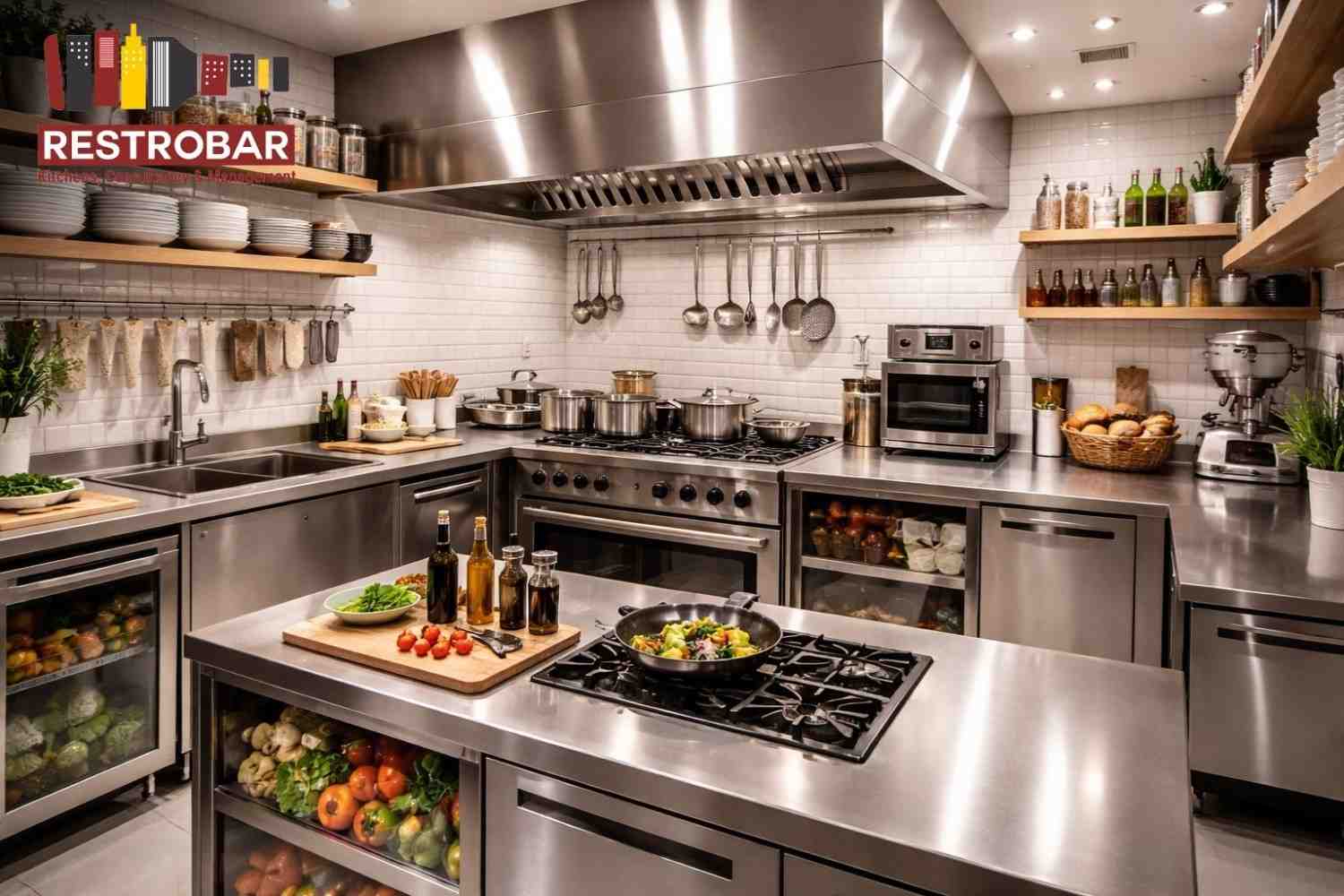
A well-planned kitchen separates raw and cooked food areas, provides easy-to-clean surfaces, and ensures proper drainage. Stainless steel workstations, smooth flooring, and washable walls are not just design choices. They are kitchen sanitation standards.
This is where professional planning helps. Many kitchens rely on experts listed on Google My Business, such as Restrobar Kitchens, to design layouts that support hygiene and workflow together.
Personal Hygiene Rules for Kitchen Staff
Even the cleanest kitchen fails if staff hygiene is ignored. Human contact is one of the biggest contamination risks.
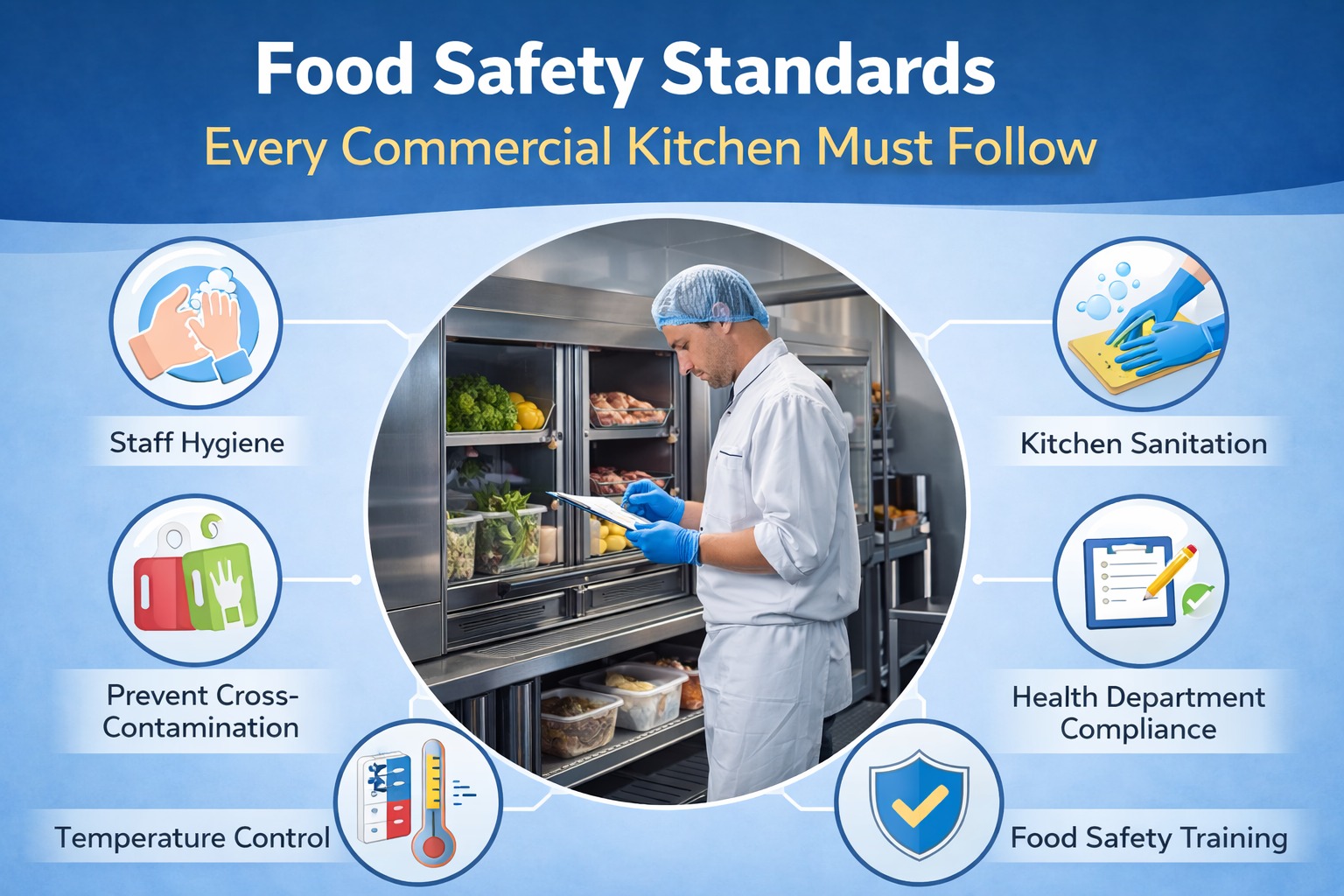
Staff must wash hands regularly, especially after handling raw food, using restrooms, or touching waste. Clean uniforms, hair restraints, and trimmed nails are basic requirements, not suggestions.
Food and Beverage Consultant in Delhi training plays a major role here. Staff should understand why rules exist, not just what the rules are. When people know the reason, compliance improves.
Safe Food Handling Procedures You Must Follow
Food handling procedures control how food moves from delivery to service. Each step matters.
Raw ingredients must be checked on arrival for freshness and proper temperature. Storage areas should separate raw meats from ready-to-eat items. Cooking must reach safe internal temperatures, and holding food must stay hot or cold as required.
Shortcuts might save time, but they also increase risk. Safe handling is about consistency, not speed.
Storage and Temperature Control Standards
Temperature abuse is one of the most common causes of foodborne illness. Cold food must stay cold. Hot food must stay hot. Anything in between becomes risky.
Commercial refrigerators and freezers should have visible thermometers and regular monitoring logs. Dry storage areas need proper ventilation and protection from pests.
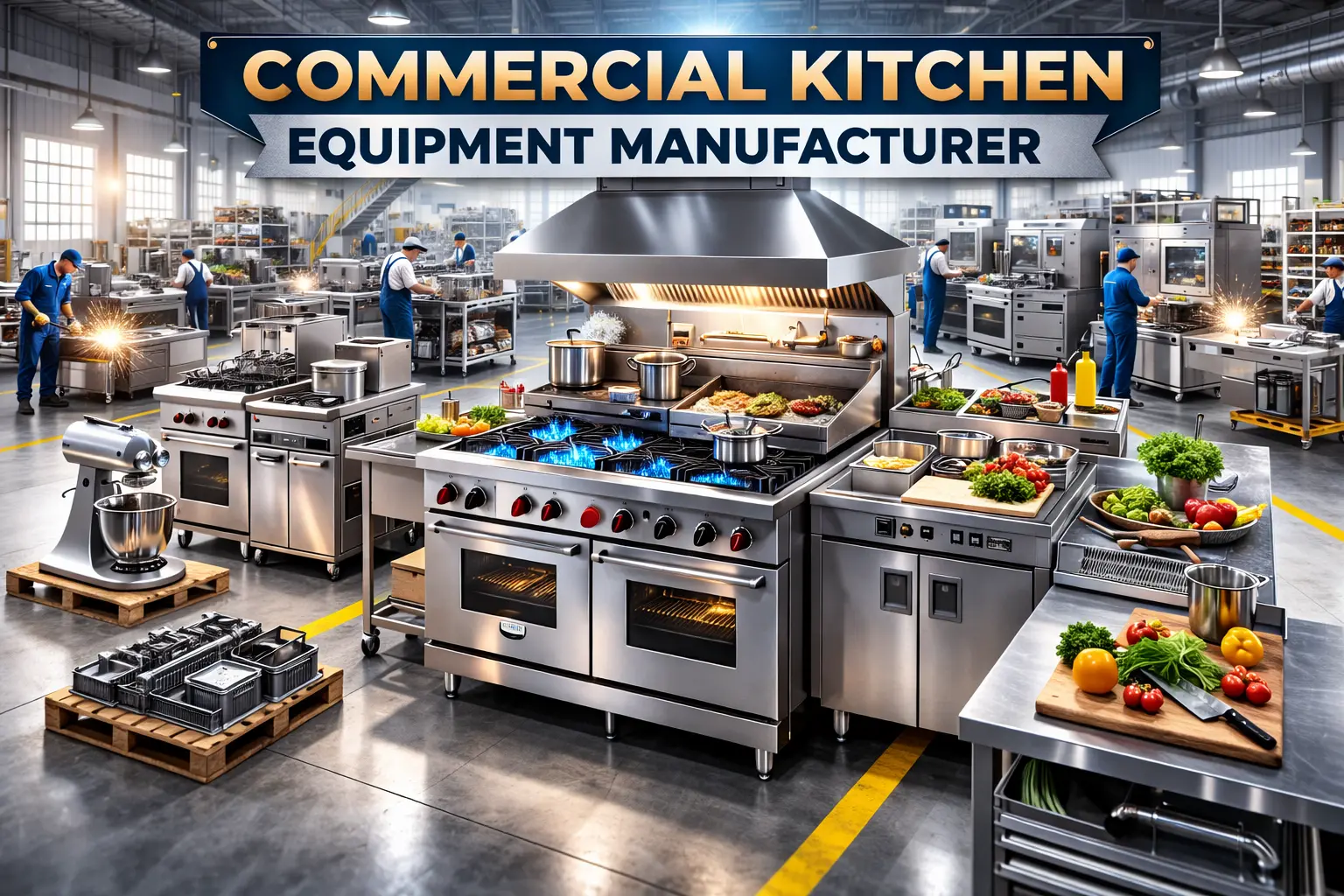
Working with a reliable Commercial Kitchen Equipment Manufacturer In Delhi helps ensure storage units meet capacity and safety needs instead of being overloaded or poorly placed.
Cleaning and Kitchen Sanitation Standards
Cleaning is not a once-a-day task. It is continuous.
Work surfaces must be cleaned between tasks. Equipment should follow a fixed cleaning schedule. Floors, drains, and waste areas need daily attention to avoid pest problems.
Approved cleaning chemicals must be used correctly. More chemical does not mean better cleaning. It often means unsafe residue.
Clear sanitation checklists help teams stay consistent even during busy hours.
Waste Management and Pest Control
Waste attracts pests, and pests shut kitchens down. That connection is very direct.
Garbage should be removed frequently and stored in covered bins away from food areas. Drains must stay clean, and pest control inspections should happen regularly.
Health department compliance checks often focus heavily on waste and pest control because these are early warning signs of deeper hygiene issues.
Importance of Food Safety Training
Food safety training is not just for managers. Every staff member plays a role.
Training should cover hygiene, food handling procedures, emergency response, and reporting unsafe conditions. Refresher sessions help prevent bad habits from creeping in over time.
Many kitchens fail inspections not because they lack equipment, but because staff are unaware or poorly trained.
Equipment Maintenance and Safety
Even the best equipment becomes unsafe if not maintained. Broken seals, damaged surfaces, and faulty temperature controls increase contamination risk.
Partnering with a trusted Hotel Kitchen Equipment Manufacturer ensures you get equipment designed for heavy commercial use and easy maintenance. Regular servicing keeps everything working as intended.
Equipment safety is part of food safety. They cannot be separated.
Documentation and Health Department Compliance
Documentation proves that safety practices are followed, not guessed.
Temperature logs, cleaning records, training certificates, and pest control reports show inspectors that systems are in place. They also help managers spot problems early.
Kitchens that document well usually perform better overall. Systems create discipline.
Final Thoughts
Food safety rules for commercial kitchens shield customers and the reputation and viability of a business. Details count, whether it’s the hygiene of a commercial kitchen, the training of staff or the food safety systems of a supplier.
When it comes to designing a new kitchen or renovating an old one, working with a Food & Beverage Consultant in Delhi, leading Commercial Kitchen Equipment Manufacturer In Delhi, or professionals such as Restrobar Kitchens can be a real boon for your time, your money, and your sanity.
Safe kitchens are not made in a day. They are made of knowledge, planning, and everyday discipline. Once food safety is ingrained in your kitchen culture, compliance is second nature, and so is trust from your customers.