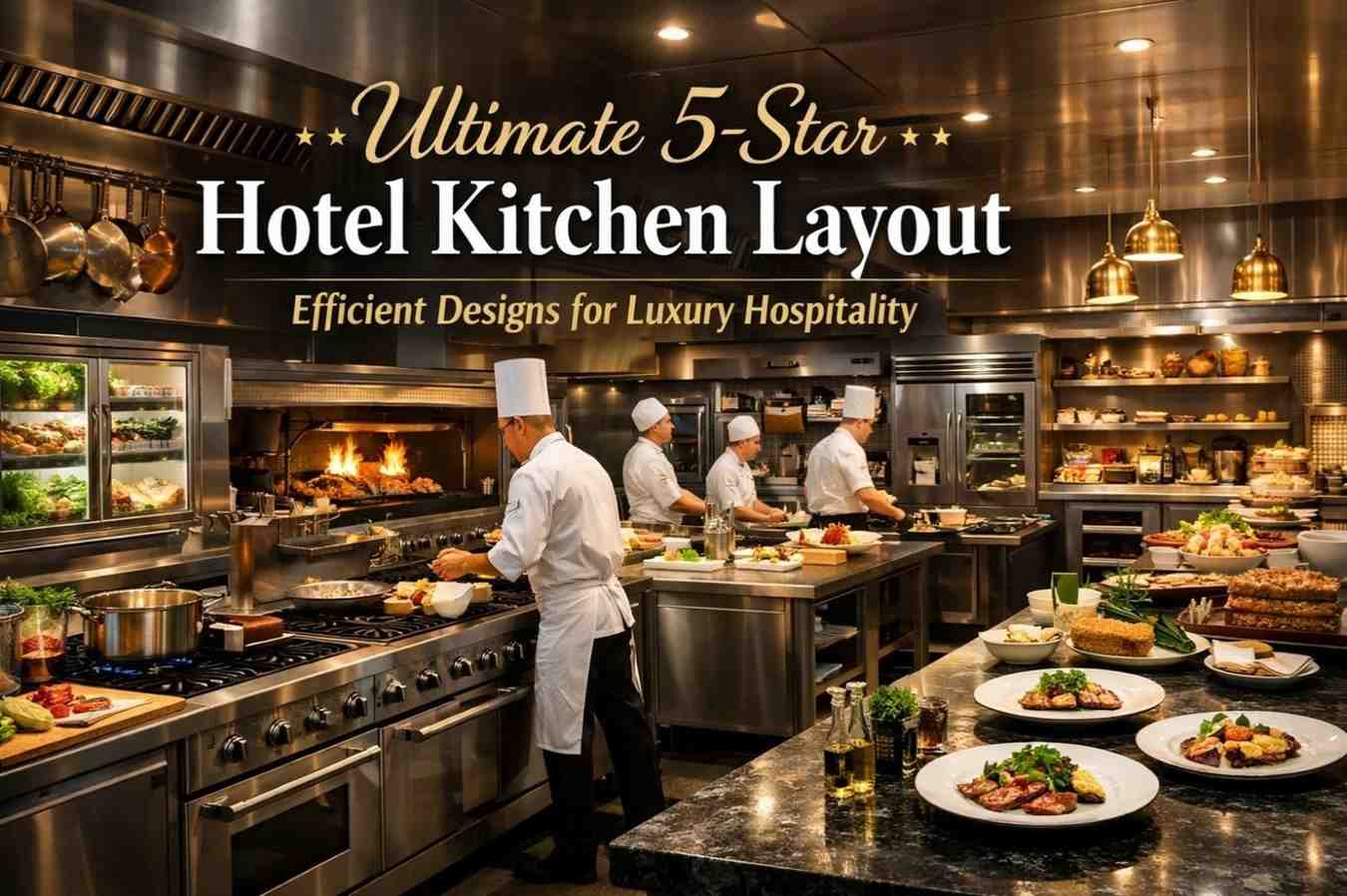
Designing the kitchen layout of a 5‑star hotel isn’t just about putting stoves and counters in a room and calling it a day. For luxury hospitality, the 5‑star hotel kitchen layout must be efficient, ergonomic, able to support high‑volume service, and ready to handle everything from fine dining to banquet orders, all without ever breaking a sweat. If you want this kind of performance in your own project, expert help like a Restaurant Kitchen Setup Consultant in Delhi, such as Restrobar Kitchens, can make a massive difference by ensuring the design matches the operational needs of real hospitality businesses.
In today’s blog, we’ll break down the key principles behind top‑tier hotel kitchen layouts, how professional workflow design improves service quality, and why thoughtful planning matters for both staff satisfaction and guest experience.
What Makes a 5 Star Hotel Kitchen Different?
A 5‑star hotel kitchen isn’t just bigger or more expensive than a regular restaurant kitchen — it’s smarter. It must handle:
- Different food service formats (fine dining, buffets, room service)
- Large food volumes during peak times
- Multiple cuisine styles, often simultaneously
- Strict hygiene and safety standards
These requirements make the kitchen both the heart and the engine room of the hotel’s dining operations. A well‑planned layout prevents chaos when orders flood in, keeping everything flowing smoothly.
Core Principles of an Efficient Hotel Kitchen Layout
Before we dive into specific layout ideas, let’s look at the central principles every high‑end kitchen layout follows:
1. Logical Workflow Zones
The foundation of an efficient kitchen layout is a clear workflow. The standard sequence in luxury hospitality is:
- Receiving & Storage – Supplies arrive and are stored in temperature‑controlled zones
- Preparation Areas – Ingredients are cleaned, cut, and prepped
- Cooking Stations – Ovens, stoves, grills, and steamers
- Plating & Dispatch – Final touches and handing food off to servers
- Cleaning & Dishwashing – Isolated from prep zones for hygiene
This “flow through” concept ensures food travels smoothly from delivery to dish without unnecessary backtracking.
2. Efficiency Over Aesthetics (But Not At the Cost of Both)
While looks matter less in back‑of‑house space, efficient placement of equipment and counters ensures chefs spend less time walking and more time cooking. In 5‑star hotel kitchens, the design often extends basic design ideas like the “work triangle” into multiple specialized zones to support volume and complexity.
3. Noise, Heat, and Safety Controls
Staff fatigue increases when kitchens get too hot or crowded, especially during dinner rush. Proper ventilation, non‑slip floors, and ergonomic stations reduce strain and accidents. This is an important part of any high‑end hospitality kitchen design.
Popular Layout Approaches in 5‑Star Hotel Kitchens
Unlike residential kitchens, hotel kitchens often blend multiple configuration ideas to support both flexibility and function.
Zone‑Based Layouts
Instead of a strict triangle, modern 5‑star hotel layouts divide the space into zones dedicated to specific tasks, prep, cooking, cold station, plating, and cleaning. This reduces cross‑traffic and supports simultaneous work by multiple chefs and assistants.
Assembly‑Line Style
For high‑volume service, a hotel kitchen can adopt an assembly line approach. Ingredients move in one direction, from prep areas to cooking lines to plating stations, minimizing confusion and improving speed.
Modular Workstations
Modular stations are becoming a staple of sophisticated layouts. They allow flexibility so that sections can be moved or reconfigured for banquets, seasonal demand, or menu changes. These stations also make cleaning easier and help future‑proof the layout.
Designing for Workflow Efficiency: Practical Considerations
Workflow isn’t just a buzzword; it’s the backbone of efficiency in high‑end kitchens. Here’s what industry experts recommend:
Reduce Movement
Staff must be able to move efficiently between stations without crossing paths. This reduces fatigue and limits accidents caused by congestion.
Separate Hot and Cold Zones
Keeping hot cooking lines away from cold prep areas prevents temperature clashes that can affect food safety and quality.
Easy Access to Storage
Storage zones (dry and cold) should be located near prep stations to minimize unnecessary steps and expedite service.
The Role of Equipment in Luxury Kitchen Layouts
No layout works without the right tools in the right places. Imagine a beautiful floor plan with mismatched or poorly placed equipment, and chaos in service follows. Equipment should support both workflow and longevity.
Here’s where expert support comes in: working with a Cafe Kitchen Equipment Manufacturer in Delhi, especially if based on the Restrobar Kitchens model, ensures that you get products that meet international and operational standards. These manufacturers understand how equipment placement affects workflow and safety.
Smart choices include:
- Energy‑efficient ovens and induction cooktops
- Touchless prep stations
- Zone‑specific refrigeration
- Heavy‑duty dishwashers and sanitation systems
Equipment selection matters as much as layout design, and professional guidance from a Commercial Kitchen Design Consultant in Delhi is a huge advantage.
Hygiene, Safety, and Compliance
A 5‑star kitchen must meet strict safety and hygiene standards. Regulations typically require proper ventilation, fire suppression systems, drainage, and dedicated cleaning zones. Good design anticipates audit requirements and makes compliance easier.
A well‑designed kitchen isn’t just safer, it also helps avoid costly shutdowns or legal issues due to health code violations.
Ergonomics: Comfort That Boosts Performance
Chefs spend hours standing, lifting, and moving quickly. Ergonomics focuses on designing a kitchen that helps them stay comfortable and productive.
Smart ergonomic design includes:
- Adjustable shelves and counters
- Anti‑fatigue flooring
- Right height for prep tables
- Adequate lighting in work zones
All these factors reduce physical strain and improve performance, another reason why luxury hospitality kitchens invest in thoughtful layout solutions.
Why Hotel Kitchen Layout Matters to Guest Experience
Guests may never see your kitchen, but they definitely feel its impact. A chaotic, inefficient kitchen delays service and lowers food quality, both unimaginable in a luxury hotel. Efficient layouts lead to:
- Faster order turnaround
- Consistent food quality
- Higher staff morale
- Reduced waste and spoilage
In short, a good kitchen layout of a 5‑star hotel doesn’t just help chefs; it elevates the entire guest experience.
Making Your 5‑Star Kitchen Future‑Proof
Luxury hospitality evolves continuously; your kitchen should too. Here’s how to build a space that stays relevant:
Plan for Scalability: Design spaces that can expand or adapt without major renovation.
Integrate Smart Systems: Use sensors for inventory and temperature management to reduce waste and downtime.
Regular Layout Review: The kitchen needs to change as menus evolve. Periodic reassessment ensures you don’t fall behind operational demands.
Professional Support: How Consultants Help
No matter how detailed your initial plan is, professional input is crucial. A brand like Restrobar Kitchens, whose profile can be found on Google My Business, brings real‑world expertise to your project. Their experience helps align the layout to your menu style, service volume, and local regulations.
Working with a consultant and choosing professional equipment from a trusted Commercial Kitchen Equipment Manufacturer In Delhi ensures your design isn’t just theoretical, it’s operationally proven.
Include input from the Food and Beverage Consultant in Delhi to align culinary objectives with space strategy. This ensures your layout design supports overall business goals.
Real‑World Case: Successful 5‑Star Kitchen Implementation
Let’s say you’re building a luxury hospitality kitchen that must handle 200+ covers daily. With professional input, your layout may be divided into:
- Dedicated prep aisles
- Hot and cold zone separation
- Modular stations for banquets
- Integrated sanitation sections
This approach reduces cross‑traffic, speeds up plating, and ensures consistent service even under peak loads.
What Makes a 5-Star Hotel Kitchen Layout Successful
A 5‑star hotel kitchen isn’t just about high‑end appliances or big spaces; it’s about smart design that supports an efficient workflow, enhances food safety, and delivers world‑class guest experiences. From zoning and equipment choices to compliance and ergonomic standards, every element of the 5‑star hotel kitchen layout plays a role in success.
If you’re planning a kitchen for luxury hospitality, professional guidance from experts like a trusted commercial kitchen equipment manufacturer in Delhi and trusted consultants will ensure you build not just a kitchen, but an operational powerhouse.