Running a successful Food Safety and Standards Authority of India compliant restaurant kitchen is not just about serving delicious food. It is about consistency, hygiene, safety, speed, and accountability. That is exactly where a strong restaurant kitchen SOP India framework becomes essential.
Whether you operate a fine-dining outlet, cloud kitchen, café, banquet, or quick-service restaurant, clear standard operating procedures help your team avoid chaos during rush hours. More importantly, they reduce food contamination risks, improve kitchen workflow, and support long-term business growth.
If you already follow proper Food Safety Standards for Commercial Kitchens, you know how important documentation, kitchen hygiene, and operational consistency are for restaurant success. Restaurants that implement structured SOPs often perform better during audits, maintain cleaner kitchens, and create smoother back-of-house operations.
At Restrobar, the focus has always been practical restaurant management solutions backed by real industry experience. Since 2002, the company has supported restaurants, hospitals, institutes, and banquet businesses through consultancy, commercial kitchen planning, and operations management.
What Is a Restaurant Kitchen SOP?
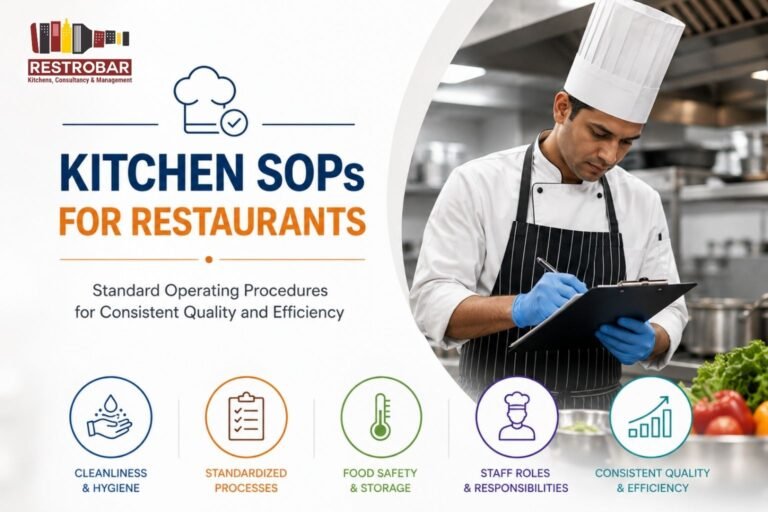
A Standard Operating Procedure (SOP) is a documented process that explains how kitchen staff should perform daily tasks. A proper restaurant kitchen SOP checklist creates uniformity in food preparation, sanitation, inventory management, and staff responsibilities.
Think of SOPs as the “recipe” for smooth restaurant operations. Without them, even experienced chefs can end up arguing over where the ladle disappeared. And every kitchen knows that missing ladles somehow vanish faster than restaurant profits during monsoon season.
A professional SOP system usually covers:
- Food handling procedures restaurant teams must follow
- Kitchen cleaning checklist daily routines
- Temperature control standards
- Kitchen hygiene SOP for restaurants
- Inventory and storage processes
- Kitchen workflow standard operating procedure
- Staff safety and sanitation rules
- Equipment handling instructions
- Audit and inspection checklist procedures
According to FSSAI hygiene requirements, food businesses in India must implement Food Safety Management Systems based on HACCP and hygiene practices.
Also Read: How to Control Food Cost in Restaurants: Tips to Reduce Expenses & Boost Profits
Why Restaurant Kitchen SOP Compliance Is Essential
Many restaurant owners believe SOPs are only for large hotel chains. That assumption often leads to inconsistent food quality, staff confusion, and hygiene failures.
In reality, restaurant kitchen SOP compliance is essential for every food business because it helps restaurants:
Maintain Food Safety
Poor food handling creates serious health risks. SOPs reduce cross contamination, improper storage, and unsafe cooking practices.
The HACCP-based food safety approach recommended by FSSAI focuses on identifying risks before they become problems.
Improve Kitchen Efficiency
Clear procedures reduce delays and confusion. Staff know exactly what to do during prep, cooking, cleaning, and closing shifts.
Support Audit Readiness
Restaurants face routine inspections related to hygiene standards and food safety SOP India requirements. Organized SOP documentation helps businesses stay prepared.
Reduce Staff Dependency
Restaurants often struggle with staff turnover. SOPs help new employees understand operations quickly without relying entirely on senior chefs.
Build Customer Trust
Customers may not see your kitchen, but they definitely notice consistency. Clean operations improve online reviews, repeat orders, and brand credibility.
Core Areas Every Restaurant Kitchen SOP Should Cover
1. Kitchen Hygiene SOP for Restaurants
Hygiene is the backbone of every commercial kitchen standard procedure.
Your SOP should define:
- Handwashing frequency
- Uniform and grooming standards
- Glove usage
- Surface sanitization
- Pest control measures
- Waste disposal methods
FSSAI Schedule 4 requires food businesses to maintain proper sanitation, ventilation, washable surfaces, pest control systems, and safe water usage.
Restaurants that actively follow Food Safety Standards usually experience fewer compliance issues and stronger operational discipline.
2. Food Storage and Temperature Control
Improper storage remains one of the biggest causes of food contamination.
A strong SOP must define:
- FIFO inventory management
- Cold storage temperatures
- Dry storage organization
- Labeling systems
- Expiry checks
- Raw and cooked food separation
Industry hygiene guidelines recommend keeping cold food below 4°C and hot food above 60°C to reduce bacterial growth risks.
3. Kitchen Cleaning Checklist Daily
Cleaning procedures should never rely on memory.
Every kitchen needs:
- Opening cleaning checklist
- Mid-shift sanitation schedule
- Closing cleaning checklist
- Deep cleaning calendar
- Equipment cleaning SOP
- Drain and exhaust cleaning process
A detailed restaurant kitchen SOP checklist helps management track accountability without constantly micromanaging the staff.
How HACCP Improves Food Safety
Many restaurant owners ask, how does HACCP improve food safety?
HACCP stands for Hazard Analysis and Critical Control Point. It identifies areas where contamination risks may occur during food preparation and handling.
The system focuses on prevention instead of damage control.
For example:
- Monitoring refrigerator temperatures
- Preventing cross contamination
- Checking cooking temperatures
- Tracking cleaning schedules
- Verifying food storage methods
According to FSSAI, HACCP-based systems form the foundation of modern food safety management practices in India.
Restaurants implementing HACCP guidelines for restaurants India often achieve better hygiene compliance and improved customer confidence.
Restaurant Kitchen SOP Template: Key Sections
A practical restaurant kitchen SOP template should include the following sections:
| SOP Area | Purpose |
| Food Receiving SOP | Checks raw material quality |
| Storage SOP | Maintains safe food storage |
| Food Preparation SOP | Standardizes prep methods |
| Cooking SOP | Ensures consistency |
| Cleaning SOP | Maintains sanitation |
| Staff Hygiene SOP | Reduces contamination risks |
| Equipment Handling SOP | Prevents misuse and damage |
| Waste Disposal SOP | Maintains cleanliness |
| Emergency SOP | Handles accidents and breakdowns |
Restaurants working with a professional Food and Beverage Consultant in Delhi often create customized SOP systems based on cuisine style, kitchen size, and operational workflow.
Common Mistakes Restaurants Make With SOPs
Many restaurants create SOPs but fail to implement them properly.
Here are common problems:
Overcomplicated Documents: Kitchen staff need simple instructions, not a 300-page “novel” nobody reads.
No Staff Training: Even the best SOP fails if employees do not understand the process.
Lack of Monitoring: Managers should regularly review compliance through inspections and audits.
Ignoring Equipment Maintenance: Commercial kitchens depend heavily on reliable equipment. Businesses often partner with a trusted Restaurant Kitchen Equipment Manufacturer In Delhi to improve kitchen functionality and hygiene standards.
Restaurants that combine proper kitchen design with operational SOPs usually perform better during inspections and rush-hour service.
What Happens If Kitchen SOP Is Not Followed?
Ignoring SOPs creates operational and legal risks.
Restaurants may face:
- Food poisoning complaints
- Failed inspections
- License issues
- Customer trust damage
- Inventory losses
- Increased staff confusion
- Poor food consistency
FSSAI regulations require documented hygiene and sanitary practices for food businesses operating in India.
That is why many restaurant operators now prioritize SOP-driven management systems instead of informal kitchen practices.
Why Restaurant Kitchen SOPs Are Essential for Success
A professional restaurant kitchen SOP India system is no longer optional. It has become essential for restaurants that want to maintain hygiene standards, improve kitchen efficiency, and build long-term customer trust.
Strong SOPs help restaurants create safer kitchens, better workflows, and more consistent dining experiences. They also support compliance with modern food safety regulations and HACCP practices.
Businesses that invest in proper systems, staff training, and structured kitchen operations position themselves for stronger growth in the competitive hospitality industry.
For restaurants aiming to improve operational standards, following Food Safety Standards alongside practical SOP implementation can create a major advantage in both customer trust and business performance.


