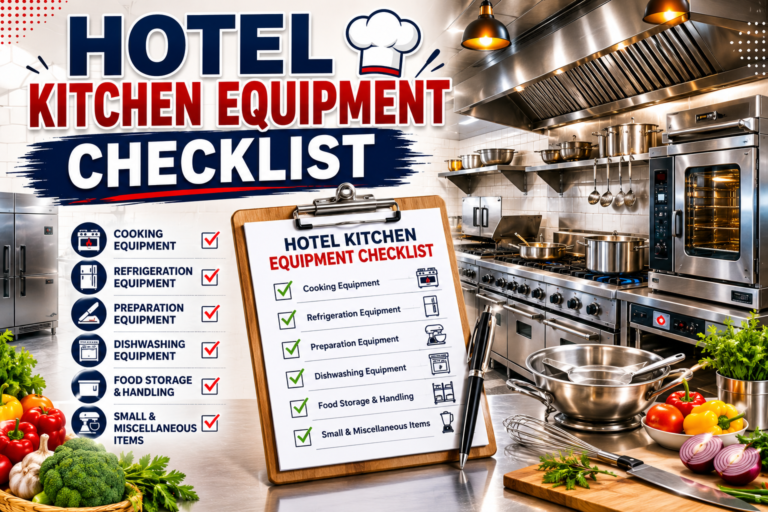
Opening a hotel involves hundreds of decisions, but one area directly impacts guest satisfaction, operational efficiency, and long-term profitability: your hotel kitchen equipment. A well-planned kitchen supports smooth service, maintains food quality, and helps staff work efficiently during peak hours.
Whether you are launching a boutique property, a luxury hotel, or a business hotel, choosing the right equipment from a trusted hotel kitchen equipment supplier in Delhi can save high costs and prevent operational headaches later. Many hotel owners partner with experienced providers like Restrobar Kitchens to design kitchens that balance performance, safety, and scalability.
Why Choosing the Right Hotel Kitchen Equipment Matters
In the modern hospitality industry, hotel kitchens often serve multiple functions. A single kitchen may support restaurants, banquet halls, room service, breakfast buffets, and outdoor catering operations.
Poor equipment planning can create bottlenecks, increase maintenance costs, and slow down service. Industry experts consistently recommend selecting equipment based on menu requirements, expected guest volume, kitchen workflow, and future expansion plans. Commercial kitchen specialists also emphasize compliance with food safety and sanitation standards when selecting equipment.
Think of your kitchen as the engine room of your hotel. Guests may never see it, but they will definitely notice when it doesn’t perform.
Step 1: Plan Your Hotel Kitchen Setup Before Purchasing Equipment
Before purchasing any equipment, create a detailed Hotel Kitchen Setup plan.
Focus on:
- Daily meal production volume
- Menu complexity
- Available kitchen space
- Staff workflow
- Utility requirements
- Storage capacity
Most successful hotel kitchens follow a logical workflow:
Receiving → Storage → Preparation → Cooking → Service → Cleaning
This layout reduces unnecessary movement and improves operational efficiency.
Experienced companies such as Restrobar Kitchens often help hotel owners design kitchens that maximize productivity while maintaining hygiene standards.
Step 2: Essential Hotel Cooking Equipment Checklist
The heart of every commercial kitchen is its cooking section.
Cooking Equipment You Should Consider
- Commercial Cooking Range: A heavy-duty cooking range remains one of the most important pieces of Hotel Cooking Equipment. It supports multiple cooking operations simultaneously and handles high-volume production.
- Combi Ovens: Combi ovens combine steaming, baking, and roasting functions in a single unit. Many hotels choose them because they improve consistency and save valuable kitchen space.
- Deep Fryers: Hotels serving snacks, breakfast items, or banquet menus often require commercial fryers capable of handling continuous usage.
- Griddles and Charbroilers: Perfect for breakfast stations, live counters, and restaurant service
- Steamers and Tilting Pans: These units help hotels prepare large quantities of food efficiently for buffets and banquet events.
Step 3: Food Preparation Equipment
Food preparation areas play a major role in maintaining speed and consistency.
Your checklist should include:
- Food processors
- Vegetable cutters
- Commercial mixers
- Meat slicers
- Work tables
- Preparation counters
- Commercial blenders
The right kitchen appliances reduce manual labor and improve consistency across every meal served. This is particularly important in the food service industry, where speed and quality must work together.
Step 4: Refrigeration and Storage Equipment
Food safety starts with proper storage. Essential refrigeration equipment includes:
- Walk-In Cold Rooms: Ideal for bulk storage of dairy products, vegetables, meat, and frozen items.
- Reach-In Refrigerators: Allow staff to access ingredients quickly during service.
- Freezers: Essential for long-term inventory management.
- Refrigerated Prep Counters: Help chefs maintain efficiency during busy service periods. Hotels should always choose reliable equipment with strong temperature control systems to reduce food spoilage and maintain safety standards.
Step 5: Stainless Steel Kitchen Equipment Requirements
Durability and hygiene remain top priorities in commercial kitchens.
Most professional kitchens use stainless steel kitchen equipment because it:
- Resists corrosion
- Supports easy cleaning
- Meets hygiene standards
- Handles heavy daily use
- Offers long service life
Common stainless steel equipment includes:
- Work tables
- Storage racks
- Sinks
- Shelving systems
- Exhaust hoods
- Utility counters
Food equipment standards developed by NSF emphasize material safety, sanitation, and equipment design for commercial food environments.
Step 6: Cleaning and Dishwashing Equipment
Many hotel owners spend months selecting ovens but only minutes thinking about dishwashing. That usually changes after the first banquet event.
A complete cleaning section should include:
- Three-compartment sinks
- Commercial dishwashers
- Handwash stations
- Drainage systems
- Waste management units
- Grease traps
Proper cleaning systems help maintain compliance and support efficient operations.
Step 7: Ventilation and Safety Systems
Every commercial kitchen needs proper ventilation.
Your checklist should include:
- Exhaust hoods
- Fresh air systems
- Fire suppression systems
- Smoke extraction systems
- Gas leak detection systems
These systems improve staff safety and support a comfortable working environment.
Step 8: Kitchen Installation and Utility Planning
Even the best equipment can underperform if installation goes wrong.
Professional kitchen installation includes:
- Gas pipeline planning
- Electrical load assessment
- Drainage planning
- Water connections
- Equipment positioning
- Ventilation integration
Working with an experienced Hotel Kitchen Equipment Supplier can help prevent costly modifications after opening.
This is one reason many hotel developers trust Restrobar Kitchens for complete commercial kitchen execution and project coordination.
Step 9: Don’t Ignore Hotel Kitchen Maintenance Services
Buying equipment is only the beginning.
Regular hotel kitchen maintenance services help:
- Extend equipment lifespan
- Improve efficiency
- Reduce downtime
- Prevent costly repairs
- Maintain food safety standards
The U.S. Department of Energy also highlights routine cleaning and maintenance as important factors in improving equipment efficiency and performance.
A preventive maintenance schedule often costs far less than emergency equipment replacement.
Working with the Right Kitchen Planning Partner
Many hotel projects involve architects, chefs, consultants, and equipment vendors. Coordination between these teams often determines project success.
Some hotel owners also work alongside professional restaurant consultants in Delhi during planning stages to ensure kitchen operations align with business goals.
Restrobar Kitchens has built a strong reputation by supporting hotel owners through equipment selection, layout planning, project execution, and post-installation support. This integrated approach helps reduce errors and creates kitchens designed for long-term performance.
Contact Restrobar Kitchens Today for Expert Hotel Kitchen Solutions
Selecting the right hotel kitchen equipment requires more than simply buying ovens and refrigerators. Successful hotel kitchens depend on smart planning, efficient workflow, durable equipment, food safety compliance, and ongoing maintenance. From catering kitchen equipment for banquet operations to advanced hotel cooking equipment for restaurant service, every purchase should support your operational goals.
Restrobar Kitchens helps hotel owners create functional, compliant, and high-performance commercial kitchens through expert planning, quality equipment, professional kitchen installation, and reliable support services. Contact Restrobar Kitchens today to discuss your project and build a kitchen designed for success in the competitive hotel industry.


