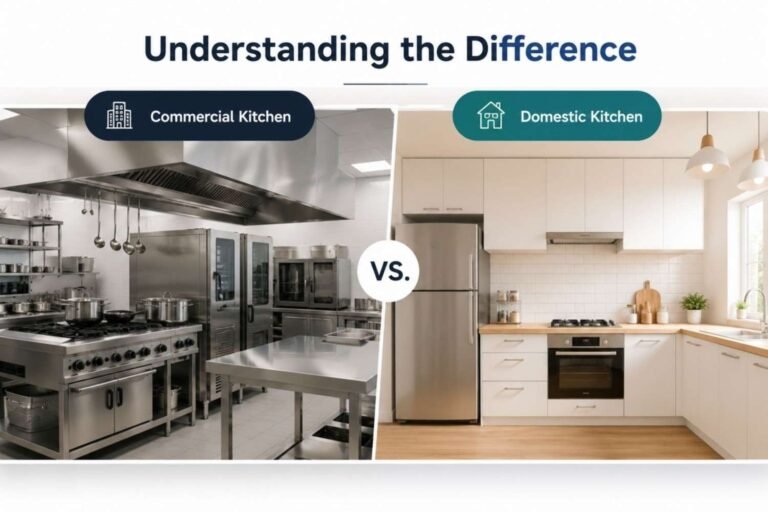
When people search for commercial vs domestic kitchen equipment, they usually want a simple answer, but the truth is a bit more layered. A kitchen is not just a place where food gets cooked; it is a system where design, tools, and purpose all work together. Whether you are setting up a restaurant or upgrading your home cooking setup, choosing the right equipment changes everything.
If you are exploring reliable suppliers, many businesses start their search with a trusted commercial kitchen equipment manufacturers in Delhi, especially when they want durable, professional-grade solutions built for real-world usage.
Let’s break it down in a practical, human way, without overcomplicating things.
What Is Commercial vs Domestic Kitchen Equipment?
At a basic level, commercial kitchen equipment is built for restaurants, hotels, catering businesses, and the food service industry. It handles high-volume cooking, continuous operation, and strict hygiene standards.
On the other hand, domestic kitchen equipment is designed for home kitchen appliances and everyday cooking needs. It focuses more on convenience, compact design, and energy efficiency rather than heavy-duty performance.
Think of it like this:
- A domestic mixer is a “morning smoothie helper”
- A commercial mixer is a “marathon runner in a chef’s uniform”
Both mix, but their endurance levels are completely different.
Also Read: How to Control Food Cost in Restaurants: Tips to Reduce Expenses & Boost Profits
Key Differences Between Commercial and Domestic Kitchen Equipment
The kitchen equipment comparison becomes clearer when we look at their purpose and performance:
1. Usage Capacity
- Commercial setups support continuous cooking in a commercial kitchen workflow
- Domestic setups fit a residential cooking environment
2. Build Quality
- Commercial units use heavy duty kitchen equipment materials like stainless steel
- Domestic appliances focus on lightweight usability
3. Performance
- Commercial machines support high volume cooking equipment needs
- Domestic machines prioritize ease over speed
4. Safety Standards
- Commercial setups follow strict kitchen safety standards and hygiene regulations
- Domestic kitchens follow basic household safety norms
These differences define how each system performs in real-world conditions.
Also Read: Top 5 Commercial Kitchen Equipment Manufacturers in Delhi You Can Trust
Commercial Kitchen Equipment: Built for Power and Precision
A professional kitchen equipment setup is not just about size, it’s about efficiency under pressure. In a busy restaurant kitchen, every second matters.
Key features include:
- High durability for constant use
- Advanced cooking appliance performance
- Strong kitchen ventilation systems
- Industrial-grade refrigeration systems
- Large-scale baking equipment and fryers
This is where industrial kitchen equipment stands apart from regular home tools. It supports food preparation equipment systems designed for speed, safety, and consistency.
In fact, most hospitality industry operations rely on structured commercial cooking systems to maintain output quality.
Domestic Kitchen Equipment: Designed for Everyday Life
A domestic kitchen focuses on comfort and simplicity. Here, cooking is a personal experience, not a production line.
Typical features include:
- Compact home kitchen appliances
- Easy-to-use controls
- Lower energy consumption
- Simple cleaning and maintenance
This setup supports a relaxed home cooking setup, where you don’t need industrial output, just reliable performance for family meals.
Unlike commercial setups, domestic tools don’t require complex kitchen infrastructure or strict kitchen hygiene standards beyond basic cleaning habits.
Kitchen Operational Differences: Workflow vs Lifestyle
Here’s where things get interesting.
A commercial kitchen workflow follows a structured system:
- Prep → Cook → Plate → Serve → Repeat
Everything is optimized for kitchen productivity systems, cooking speed optimization, and team coordination.
In contrast, a domestic kitchen follows a flexible rhythm:
- Cook when hungry
- Experiment when inspired
- Clean when convenient
Commercial kitchens also depend heavily on equipment load capacity, while home kitchens rarely face such pressure.
Even culinary workspace design differs dramatically between the two.
Cost, Durability, and Maintenance Differences
Let’s be honest, money matters.
Commercial Equipment
- Higher initial investment
- Long cooking equipment lifespan
- Requires regular kitchen maintenance requirements
- Built for continuous usage
Domestic Equipment
- Affordable pricing
- Lower maintenance needs
- Shorter usage cycles
Commercial tools often deliver better long-term value in business environments due to their durability and kitchen efficiency tools design.
Energy Efficiency and Safety Considerations
Modern kitchens, both commercial and domestic, focus more on energy use and safety.
Commercial setups prioritize:
- Energy-efficient heavy machinery
- Strict kitchen safety protocols
- Advanced fire and heat control systems
Domestic kitchens focus on:
- Lower electricity consumption
- Simple safety features
- Easy handling for non-professionals
Both systems are improving, but their priorities remain different due to usage scale.
Choosing the Right Kitchen Equipment
Before deciding between commercial vs domestic kitchen equipment, ask yourself:
- Are you cooking for family or customers?
- Do you need speed or comfort?
- Will the equipment run for hours daily?
If you are setting up a business, consulting an experienced commercial kitchen equipment manufacturer can help you design a proper system that fits your workflow.
Professionals like Restrobar Kitchens, often visible through their Google presence, specialize in designing complete setups that align with food service operations and real-world kitchen demands.
You can also explore a hotel kitchen equipment manufacturer if you are planning large-scale hospitality projects requiring specialized kitchen design systems.
Interestingly, many chefs also prefer working with a trusted commercial kitchen equipment manufacturer again during expansion because scaling a kitchen requires consistency in kitchen equipment efficiency and layout.
Kitchen Equipment Types Across Both Systems
Both commercial and domestic kitchens use similar categories, but their scale differs:
- Cooking appliances
- Food preparation equipment
- Refrigeration systems
- Baking equipment
- Culinary tools
However, commercial versions are engineered for industrial-grade use, while domestic versions focus on simplicity.
This difference defines the core of kitchen equipment types and their application in real environments like professional chef kitchens or home setups.
Real-World Insight: Why the Difference Matters
The food service industry depends heavily on reliability. A single equipment failure in a restaurant can disrupt the entire food preparation systems chain.
That’s why commercial kitchens invest in systems built for durability, speed, and safety.
Meanwhile, home kitchens prioritize creativity, comfort, and flexibility.
Both serve different lifestyles, but both matter equally in their own space.
What You Should Remember Before Choosing Kitchen Equipment
Understanding commercial vs domestic kitchen equipment is not just about comparing machines; it’s about understanding purpose.
A commercial kitchen is built like a production engine, while a domestic kitchen feels more like a personal creative space. One focuses on scale, the other on simplicity.
If you are planning a professional setup, always consult experts before investing. A reliable, commercial kitchen equipment manufacturer can guide you through design, durability, and efficiency choices. Similarly, businesses looking for hospitality setups often rely on a hotel kitchen equipment manufacturer in Delhi to ensure smooth operations.
And if you are still confused, revisit your needs, because the right kitchen equipment doesn’t just cook food, it supports your entire workflow.
FAQ: Difference Between Commercial and Domestic Kitchen Equipment
Commercial kitchen equipment is designed for high-volume cooking in restaurants and hotels, while domestic kitchen equipment is built for everyday home use with lower capacity and simpler functionality.
Commercial equipment uses heavy-duty materials, supports continuous operation, and meets strict kitchen safety standards, which increases its cost compared to home kitchen appliances.
It is not recommended because domestic appliances are not designed for continuous use or high-volume cooking and may fail under pressure in a commercial kitchen workflow.
Examples include industrial ovens, deep fryers, refrigeration systems, baking equipment, and heavy-duty food preparation equipment used in restaurants and the food service industry.
Your choice depends on usage choose commercial equipment for business or restaurant use, and domestic equipment for personal home cooking and daily meal preparation.
Yes, commercial equipment needs regular maintenance due to heavy usage, while domestic kitchen appliances require less frequent and simpler upkeep.


