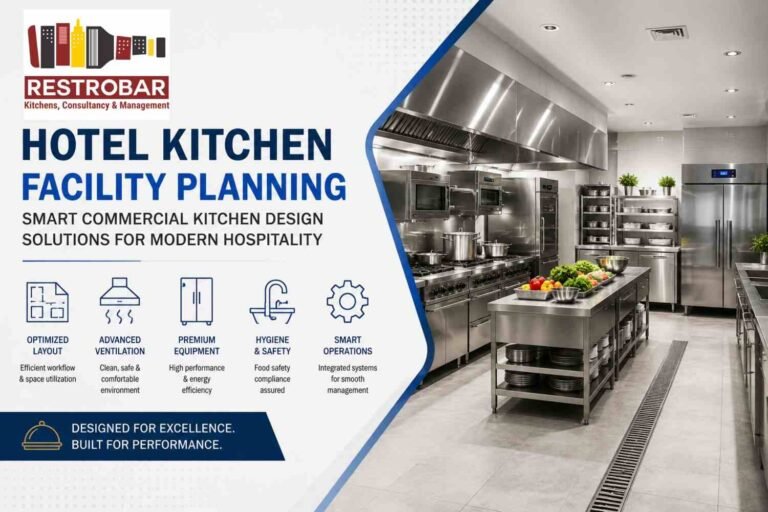
A hotel kitchen is more than a cooking space. It is the engine room of hospitality. Guests may remember the room view or the swimming pool, but they never forget bad food or delayed service. That is why smart hotel kitchen facility planning plays a major role in modern hospitality success.
Today, hotels focus on speed, hygiene, energy savings, and kitchen productivity. A poorly planned kitchen creates chaos. Chefs walk extra miles, orders get delayed, and operational costs rise faster than buffet dessert consumption on a Sunday brunch.
Modern hotels now invest in advanced hospitality kitchen solutions with better workflow, smart kitchen automation, and energy-efficient systems. Many businesses also work closely with commercial kitchen equipment manufacturers in Delhi to build scalable and practical kitchen spaces for hotels, resorts, and cloud kitchens.
Brands like Restrobar Kitchens have also gained attention for providing customized commercial kitchen planning solutions that align with current food service operations and hospitality infrastructure requirements.
Why Hotel Kitchen Facility Planning Matters
Every successful hotel kitchen starts with planning. Design affects everything from food quality to staff movement.
Good planning helps hotels:
- Improve kitchen workflow optimization
- Reduce food preparation delays
- Maintain food safety compliance
- Increase kitchen productivity
- Lower utility costs
- Create safer workspaces
According to the Food and Agriculture Organization (FAO) and HACCP food safety principles, kitchen layout and hygiene systems directly affect food safety standards and operational efficiency.
A smart industrial kitchen layout also reduces unnecessary movement. Chefs should not run marathons between refrigeration units and cooking stations. They already work under enough pressure.
Also Read: Top 5 Commercial Kitchen Equipment Manufacturers in Delhi You Can Trust
Understanding Modern Hotel Kitchen Design
Modern hotel kitchen design focuses on functionality, hygiene, and scalability. Hotels today serve multiple cuisines, buffet systems, room service, banquets, and sometimes cloud kitchen operations from a single facility.
That means the kitchen must support:
- Bulk food production
- Fast service
- Safe storage
- Separate preparation zones
- Smooth cleaning processes
Professional hotel food service design usually includes:
Receiving Area: This section handles raw material delivery and inspection.
Storage Area: Hotels use industrial refrigeration systems and dry storage units to maintain ingredient quality.
Preparation Zone: Chefs prepare vegetables, meat, sauces, and bakery items here.
Cooking Area: The heart of the kitchen. This zone contains commercial kitchen equipment like ranges, fryers, ovens, and grills.
Service Area: Finished dishes move from here to guests, restaurants, banquet halls, or room service teams.
Each section must connect logically. Good commercial kitchen efficiency depends heavily on movement flow.
The Role of Commercial Kitchen Equipment
No hotel kitchen works efficiently without proper equipment planning.
Modern hotels prefer stainless steel kitchen equipment because it supports hygiene standards, durability, and easier cleaning. Equipment selection should match menu size, service style, and production capacity.
Essential commercial kitchen equipment includes:
- Combination ovens
- Refrigeration systems
- Deep fryers
- Steamers
- Preparation tables
- Exhaust hoods
- Dishwashing systems
- Kitchen display systems (KDS)
Many hotels now collaborate with commercial kitchen equipment manufacturers in Delhi for custom-built kitchen systems that fit available space and operational requirements.
Companies like Restrobar Kitchens also help hotels create practical layouts that support restaurant operations and industrial food preparation needs.
Kitchen Workflow Optimization Improves Productivity
A smart kitchen workflow saves time and reduces stress.
Imagine a chef carrying hot soup across a crowded kitchen because refrigeration sits on the opposite side. That is not workflow optimization. That is a reality show challenge.
Efficient kitchen workflow optimization focuses on:
- Reduced staff movement
- Faster food preparation
- Better communication
- Organized workstations
- Smooth service flow
Hotels should place preparation, cooking, and plating stations close together. Smart zoning improves kitchen productivity and supports hotel operations management.
Modern hospitality kitchen solutions also integrate restaurant management systems and kitchen display systems to reduce manual errors.
Importance of Food Safety Compliance
Food safety is not optional in hospitality. One hygiene mistake can damage a hotel’s reputation overnight.
That is why professional hotel kitchen facility planning follows HACCP guidelines and food safety standards carefully.
Key safety considerations include:
- Proper drainage systems
- Separate raw and cooked food zones
- Ventilation management
- Temperature-controlled storage
- Anti-slip flooring
- Handwashing stations
Commercial ventilation systems also play a major role. Poor airflow creates heat buildup, discomfort, and hygiene issues.
Hotels investing in smart kitchen technology often include IoT kitchen solutions for temperature monitoring and automated alerts.
Reliable partners like Restrobar Kitchens help hotels implement practical kitchen safety standards while maintaining operational efficiency.
Smart Kitchen Automation Is Changing Hospitality
Technology now plays a major role in hotel engineering solutions.
Modern kitchens use:
- Smart sensors
- Automated cooking systems
- Digital order tracking
- IoT kitchen solutions
- Energy monitoring systems
These tools improve food service operations and reduce waste.
For example, kitchen display systems replace printed tickets with digital screens. This improves communication between servers and chefs. It also reduces order confusion during peak hours.
Hotels using smart kitchen automation often report better speed and reduced operational errors.
Cloud kitchen and central kitchen models also continue to influence the hotel & restaurant industry. Many hotels now prepare food centrally for multiple outlets to improve consistency and reduce costs.
Sustainability in Commercial Kitchen Planning
Energy costs continue to rise. Sustainable kitchen planning now matters more than ever.
Hotels focus on:
- Energy-efficient refrigeration
- LED lighting
- Water-saving dishwashers
- Heat recovery systems
- Efficient exhaust systems
Modern commercial kitchen planning also reduces food waste through smarter storage and inventory management.
Sustainability is no longer a marketing trend. It directly affects profitability.
Hotels working with experienced hospital kitchen equipment manufacturer in Delhi suppliers often receive customized energy-efficient solutions designed for long-term operational savings.
Choosing the Right Kitchen Planning Partner
A hotel kitchen is a long-term investment. Poor planning creates expensive operational problems later.
Before selecting a kitchen consultant or manufacturer, hotels should evaluate:
- Industry experience
- Knowledge of food safety compliance
- Understanding of hospitality infrastructure
- Custom design capabilities
- Installation support
- After-sales service
Professional companies like Restrobar Kitchens provide integrated hospitality kitchen solutions that combine design, equipment planning, and workflow optimization.
Many hotel businesses also search for trusted commercial kitchen equipment manufacturers in Delhi because local expertise helps with faster support, customization, and installation services.
At the same time, hotels looking for healthcare and institutional projects often work with a reliable hospital kitchen equipment manufacturer in Delhi to ensure hygiene-focused food preparation systems.
Future Trends in Hotel Kitchen Facility Planning
Hotel kitchens continue to evolve rapidly.
Key trends shaping the future include:
Cloud Kitchen Integration: Hotels now use cloud kitchen models to expand delivery services.
Contactless Technology: Digital ordering and automation improve guest convenience.
Modular Kitchen Design: Flexible kitchen layouts support future expansion.
Smart Monitoring Systems: IoT kitchen solutions improve equipment management and maintenance.
Sustainable Infrastructure: Hotels continue investing in energy-efficient hospitality infrastructure.
The hospitality industry is becoming more technology-driven, guest-focused, and operationally efficient.
Final Thoughts on Hotel Kitchen Facility Planning
Smart hotel kitchen facility planning is no longer just about equipment placement. It combines design logic, operational strategy, food safety standards, and modern technology. Hotels that invest in efficient kitchen workflow optimization, smart kitchen automation, and proper commercial kitchen planning create better guest experiences and stronger business performance.
Whether you operate a luxury hotel, resort, banquet facility, or cloud kitchen, a professionally planned kitchen supports long-term growth. Experienced companies like Restrobar Kitchens continue helping hospitality businesses create practical and scalable kitchen environments that support modern restaurant operations, industrial food preparation, and hospitality infrastructure needs.
If you are planning a modern hospitality kitchen solution for your project, contact us to discuss customized commercial kitchen planning and smart hotel kitchen design solutions tailored to your business needs. Because in hospitality, great food deserves a great kitchen behind it.
FAQ's – Hotel Kitchen Facility Planning
Hotel kitchen facility planning is the process of designing and organizing commercial kitchen spaces for hotels, resorts, and hospitality businesses. It includes kitchen layout planning, equipment selection, workflow optimization, ventilation systems, and food safety compliance.
Proper hotel kitchen facility planning improves kitchen productivity, reduces operational delays, enhances food safety standards, and supports smooth food service operations. A well-planned kitchen also lowers maintenance and energy costs.
Kitchen workflow optimization reduces unnecessary staff movement and improves coordination between preparation, cooking, and service areas. This increases speed, reduces errors, and improves overall commercial kitchen efficiency.
Commercial ventilation systems help remove smoke, grease, heat, and odors from the kitchen. Proper ventilation improves employee comfort, supports kitchen hygiene standards, and reduces fire risks.
Smart kitchen automation improves operational efficiency through digital order tracking, IoT kitchen solutions, automated monitoring systems, and restaurant management systems. It helps reduce human errors and improve service speed.
Restrobar Kitchens provides customized hospitality kitchen solutions, commercial kitchen planning, workflow optimization, equipment selection, and modern kitchen infrastructure solutions for hotels, restaurants, and cloud kitchens.


