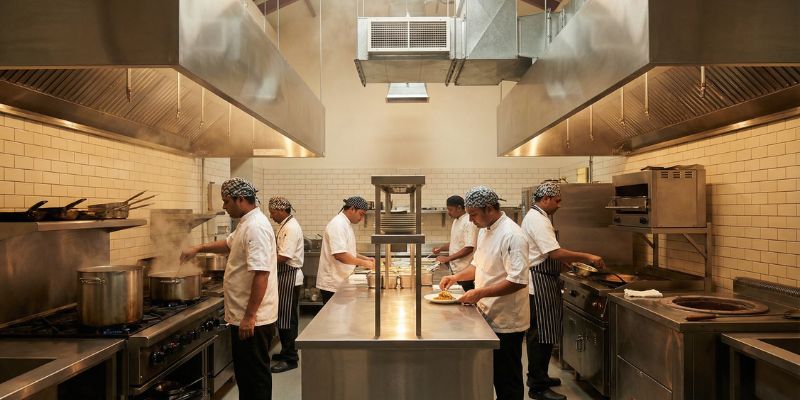
Behind every successful restaurant is a kitchen that works like a well-rehearsed team rather than a battleground. While customers see beautifully plated dishes, the real story unfolds behind the scenes. This is where restaurant productivity is either built or broken. When workflow lacks structure, even the best chefs struggle. When systems work, productivity improves naturally, without shouting, rushing, or burning out staff.
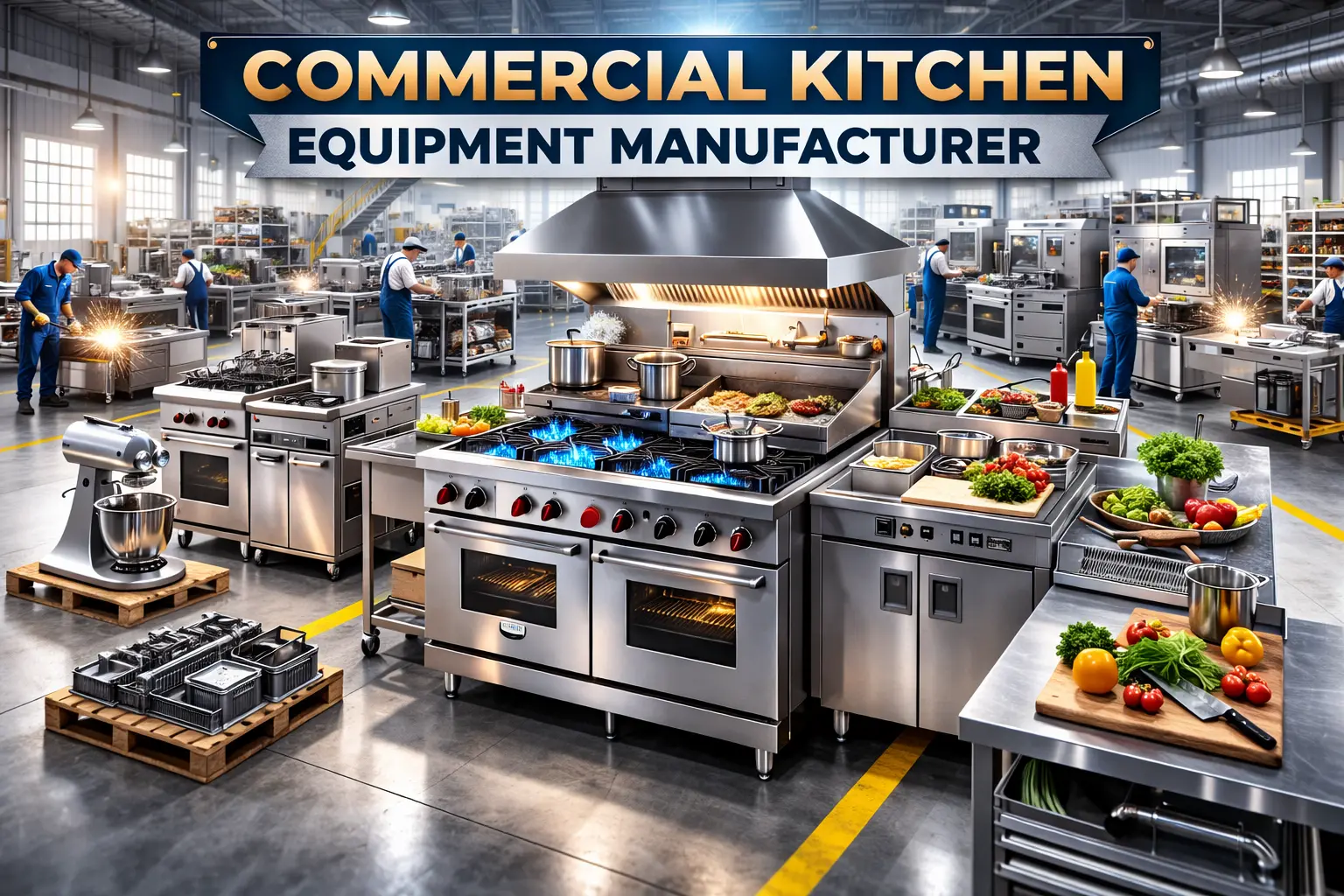
Many restaurant operators start this path by working with Commercial Kitchen Equipment Manufacturer in Delhi, like Restrobar Kitchens, making sure the base of their kitchen is strong, compliant, and made for the strain of actual hands. That initial choice can have a legacy impact, making a kitchen feel chaotic or controlled from day one.
Why Restaurant Productivity Lives and Dies in the Kitchen
A restaurant’s productivity does not depend on how busy it looks, but on how efficiently it operates. The kitchen controls service speed, food quality, consistency, and staff morale. According to the National Restaurant Association, inefficient kitchen operations directly increase labour costs and employee turnover. Simply put, slow kitchens cost money.
High productivity does not mean working faster at all costs. It means working smarter. When chefs spend less time walking, waiting, or searching for tools, they spend more time cooking. Logic supports this, and real kitchens prove it daily.
Also Know: A Complete Restaurant Equipment List & Buyer’s Guide
Commercial Kitchen Efficiency: The Quiet Profit Booster
Commercial kitchen efficiency often goes unnoticed until it is missing. Efficient kitchens minimise wasted motion, energy, ingredients, and time. This efficiency improves margins while reducing stress across the team.
Regulatory bodies such as NSF International and the FDA Food Code emphasise correct equipment placement, ventilation, and hygiene-focused layouts. These are not theoretical ideals. They exist because kitchens that follow them operate more smoothly and safely.
Commercial Kitchen Design: Where Structure Replaces Disorder
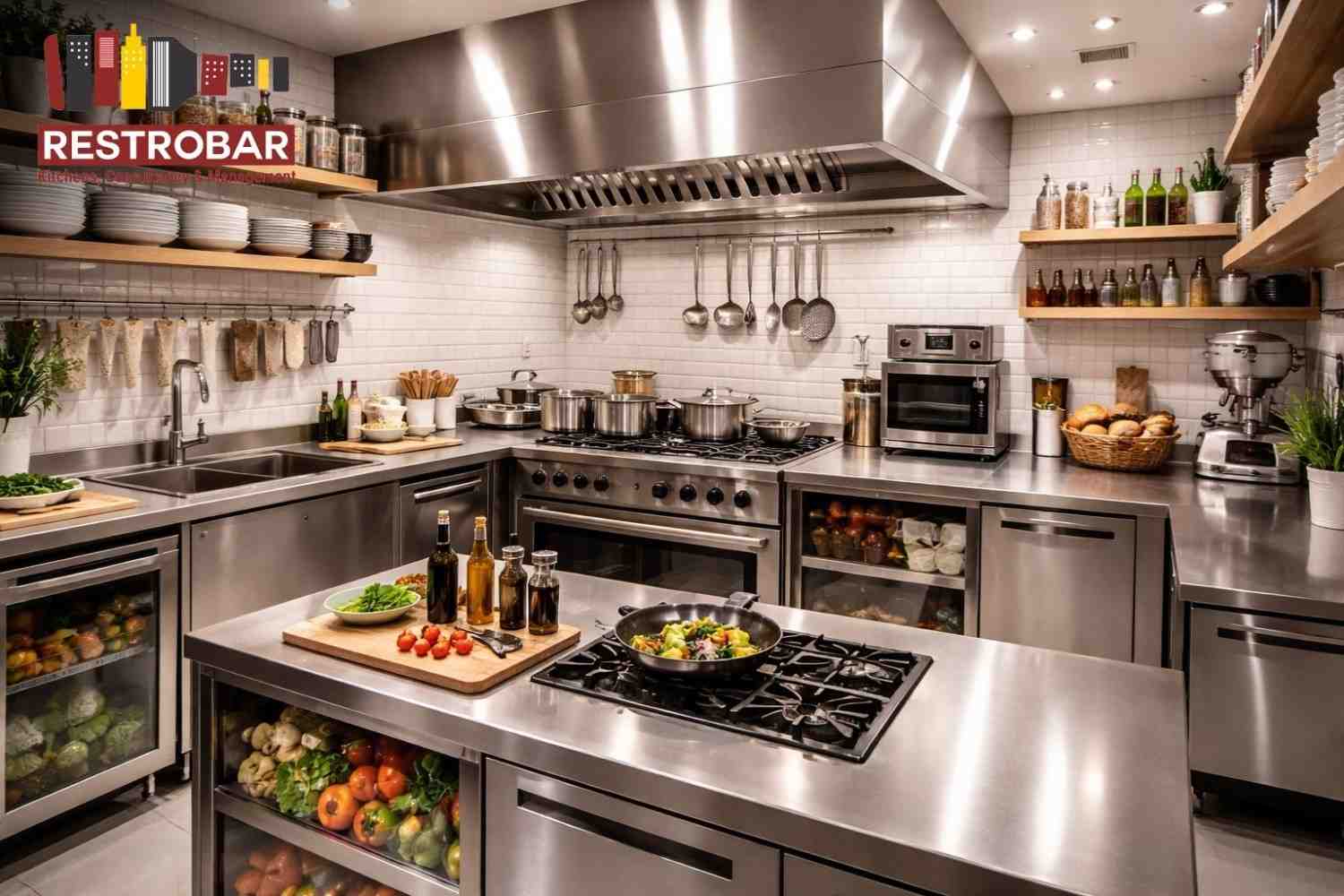
A thoughtful commercial kitchen design turns limited space into a functional ecosystem. Design influences how staff move, communicate, and collaborate during service. Poor layouts force staff to cross paths unnecessarily, causing delays and mistakes. Good design quietly guides people where they need to go.
Design standards promoted by OSHA and NSF focus on ergonomics, ventilation, and logical zoning. These standards help reduce injuries and fatigue while improving output. When equipment aligns with workflow, kitchens feel calmer, even during peak hours.
This is where professional Commercial Kitchen Design Consultants in Delhi, including teams at Restrobar Kitchens, add measurable value by converting operational needs and compliance requirements into kitchens that perform under pressure.
Restaurant Kitchen Workflow: The Backbone of Daily Operations
A kitchen’s success depends heavily on its restaurant kitchen workflow. Workflow determines how ingredients move from storage to prep, from cooking to plating, and finally to service. When that flow breaks, delays multiply.
Many productivity problems stem from workflow issues rather than staffing or skill gaps. If a cook waits repeatedly for prep or plating space, the system, not the person, needs fixing. Strong workflow reduces confusion and allows chefs to focus on quality.
Kitchen Workflow Optimization That Actually Works
Effective kitchen workflow optimization starts with observation. Managers who spend time watching service patterns often discover obvious friction points. These might include congested prep areas, poorly placed refrigeration, or overburdened stations.
Optimisation does not require constant restructuring. Small adjustments, such as relocating frequently used equipment or reorganising prep sequences, often deliver noticeable improvements. According to research highlighted by Harvard Business Review, clear processes improve team efficiency without limiting creativity. Kitchens thrive when structure supports skill.
Restaurant Kitchen Planning with the Future in Mind
Too many kitchens are designed only for opening day. Smart restaurant kitchen planning looks beyond the first service and anticipates growth. Menus evolve, delivery volumes increase, and equipment needs change.
Flexible layouts and scalable products enable kitchens to evolve without costly rebuilds. This method is cost-effective in the long run and minimizes downtime. At this point, many operators turn once again to a Reliable Commercial Kitchen Equipment Manufacturer, such as Restrobar Kitchens, to make certain their equipment selections are aligned with not only their current operations, but also their prospective growth.
Equipment Choices and Their Impact on Efficiency
Equipment influences pace, consistency, and maintenance costs. Energy-efficient appliances reduce operating expenses, while easy-to-clean surfaces support hygiene and faster turnover between shifts.
Responsible manufacturers follow BIS, NSF, and international safety standards. These certifications exist to protect kitchens from equipment failures and compliance issues. Kitchens that source equipment through experienced providers such as Restrobar Kitchens benefit from tested solutions and dependable after-sales support.
Restaurant owners can also verify service locations and credentials through the Google My Business profile of Restrobar Kitchens, ensuring transparency and local trust.
The Value of Local Expertise in Delhi
Working with Commercial Kitchen Design Consultants in Delhi provides practical advantages that generic layouts cannot offer. Local professionals understand municipal regulations, climate-related ventilation challenges, and regional supply chains.
This local insight allows kitchens to pass inspections smoothly and perform efficiently during peak seasons. Consultants with hands-on experience in the Delhi market design kitchens that work in practice, not just on paper.
People, Training, and the Human Side of Productivity
No kitchen succeeds on design alone. People turn plans into performance. Training staff on workflow logic helps them understand not just what to do, but why it matters.
Institutions like NIOSH emphasize training to reduce fatigue and workplace injuries. Healthy, confident teams work more efficiently and make fewer mistakes. Supportive kitchen cultures also encourage feedback, which often leads to simple yet powerful improvements.
From Control to Confidence
Improving restaurant productivity requires clarity, not shortcuts. By focusing on commercial kitchen efficiency, practical commercial kitchen design, and realistic kitchen workflow optimization, restaurants transform daily chaos into controlled confidence.
When kitchens are planned logically, equipped responsibly, and supported by experienced brands such as Restrobar Kitchens, productivity becomes sustainable. The result shows in food quality, operational stability, and a team that works with confidence rather than constant pressure.
Ready to Build a Kitchen That Performs Every Day?
If your kitchen is cluttered, slow, or chaotic, you need to reconsider its layout and utilisation. Whether you are starting a new restaurant or upgrading an existing one, professional advice can help you avoid expensive mistakes and improve long-term performance.
Connect with Restrobar Kitchens to explore professional kitchen planning, compliant equipment solutions, and expert consultation tailored to your operational goals. You can find their verified business location through their Google My Business profile and take the first step toward a kitchen designed for productivity, not chaos.