
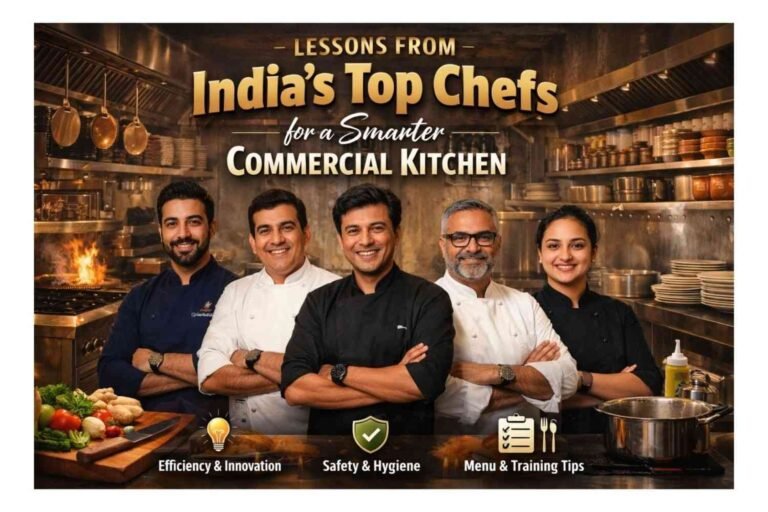
In the dynamic world of food service, lessons from India’s famous chef icons aren’t just inspiring stories; they’re practical guides for anyone building a successful professional kitchen. Whether you’re running a bustling restaurant or planning a state‑of‑the‑art kitchen setup, insights from the best in the business can help you work smarter, not harder.
And yes, if you’re redesigning or building a kitchen from scratch, partnering with a Commercial Kitchen Equipment Manufacturer In Delhi like Restrobar Kitchens (find them on Google Business) can give you the real competitive edge you need.
Let’s dive into how culinary legends can shape your thinking and help you build an efficient, happy, and profitable kitchen.
Why Learn from Famous Indian Chefs?
India’s culinary journey is rich and varied. From centuries‑old traditions to today’s global restaurant innovations, the country has produced some of the world’s most respected chefs. Notable culinary experts have not only popularized Indian cuisine at home but also brought it onto the international stage. Examples include names like Vikas Khanna and Garima Arora who have earned global awards in fine dining.
But what makes these chefs remarkable isn’t just their talent with spices; it’s how they manage people, processes, and places. These are exactly the lessons a smart commercial kitchen needs.
Also Read: Top 5 Commercial Kitchen Equipment Manufacturers in Delhi You Can Trust
Meet India’s Culinary Masters (and Their Kitchens)
Before we discuss lessons for your kitchen, let’s highlight some top Indian culinary experts your team can learn from:
1. Sanjeev Kapoor — The Household Name
Ask any Indian foodie about famous Indian chefs, and Sanjeev Kapoor will likely be the first name mentioned. From hosting Khana Khazana to running multiple successful restaurants, Kapoor transformed Indian cooking into a modern, accessible art. His focus on simplicity and consistency set benchmarks for quality.
2. Vikas Khanna — Global Gourmet Storyteller
Vikas Khanna started in Amritsar and climbed to Michelin‑star fame. Besides high cuisine, he’s authored books and founded the Museum of Kitchen Arts — a testament that chefs think about culture and narrative, not just food.
3. Ranveer Brar — Innovation Meets Tradition
Chef Ranveer Brar’s style blends regional tradition with modern technique. He believes in understanding history before innovating, a philosophy that works in both menu development and kitchen operations.
4. Garima Arora — Breaking Barriers
Garima Arora became the first Indian woman chef to receive a Michelin star, demonstrating the importance of bold creativity and team collaboration.
5. Manish Mehrotra — Elevated Indian Identity
Manish Mehrotra’s work with Indian Accent shows how tradition and fine dining can coexist, a lesson in embracing your roots while pushing innovation.
And that’s just the beginning, from other celebrated figures like Ripudaman Handa, Pankaj Bhadouria, Kunal Kapur, and even Chef Damu (who holds a Guinness World Record and was recently awarded the Padma Shri), India’s list of culinary greats is inspiring.
Together, these chefs teach us that success goes beyond flavour, it’s about leadership, systems, and culture.
Lesson 1: Start Strong with Smart Kitchen Design
Great cooking starts before the first dish hits the plate. It starts with layout, equipment choices, and workflow planning.
This is where Commercial Kitchen Design Consultants in Delhi and specialists like Commercial Kitchen Equipment Manufacturer in Rohini play a big role. A thoughtfully designed kitchen reduces waste, minimizes staff movement, and speeds up service.
Think about this:
- Storage should be close to prep stations.
- Hot and cold zones should never collide.
- Visibility should be clear between key workstations.
A kitchen that flows naturally improves productivity and reduces mistakes, just like in the kitchens run by top chefs.
Lesson 2: Equipment Matters — Choose Wisely
No chef can create magic without the right tools. From heavy‑duty ranges to reliable refrigeration, success lies in matching equipment to menu needs.
Back in Delhi, businesses often consult a Commercial Kitchen Equipment Manufacturer In Delhi for custom solutions. Companies like Restrobar Kitchens build teams that understand how professionals use equipment, not just what looks nice on paper.
When chefs evaluate equipment, they look for:
- Durability under peak demand
- Ease of cleaning and maintenance
- Energy efficiency
- Adaptability (multiple uses from one appliance)
Whether you run a cloud kitchen, a fine dining space, or a high‑volume outlet, high‑quality, purpose‑built equipment pays off quickly.
Lesson 3: Invest in People, Not Just Tools
What makes celebrity chefs in India stand out isn’t just their knowledge, it’s their ability to work with people.
Consider how chefs like Ranveer Brar or Sanjeev Kapoor mentor their teams, lead with respect, and build a sense of family in the kitchen.
Here’s what that teaches kitchens everywhere:
- Cross‑training helps flexibility — staff can cover different stations.
- Clear communication reduces errors — especially during rush hours.
- Healthy culture = low turnover — happy teams cook better food.
Even the rockstar chefs invest deeply in training and development, because talent alone isn’t enough without a supportive environment.
Lesson 4: Plan With Precision (Prep Like a Pro)
Have you ever watched a cooking show and wondered how chefs appear so calm? It’s not magic, it’s preparation.
Legendary chefs follow mise en place, “everything in its place.” They prep ingredients, tools, and stations before service starts.
Here’s how you can do this:
- Use checklists for daily prep tasks.
- Label and date all ingredients.
- Have backups ready (just like airline pilots do!)
When your kitchen team starts the day organized, service becomes effortless.
Lesson 5: Quality Control is a Habit
Top Indian gourmet chefs treat consistency as a non‑negotiable.
Whether it’s a Bengali fish curry or a Punjabi tandoori dish, customers expect the same experience every time.
Here’s how to lock in quality:
- Standardize recipes and portion sizes
- Check food temperatures regularly
- Perform taste checks during service
- Audit deliveries from suppliers
Even Michelin‑starred kitchens do this daily, not as a chore, but as part of their culture.
Lesson 6: Use Technology That Makes Sense
Today’s commercial kitchens aren’t just stainless steel and flame. They are also digital ecosystems.
From inventory apps to kitchen display systems, technology can make your operations smoother. Just don’t go overboard, choose tools that help your specific challenges, not shiny gadgets you’ll never use.
Many successful kitchens use:
- Inventory tracking software
- Order management systems
- Temperature scanners
- Analytical dashboards
Such tech lets managers spot trends and avoid costly mistakes, a big lesson from kitchens led by world‑class chefs.
Lesson 7: Design for Safety and Sanitation
Nothing undermines a kitchen faster than poor hygiene. High‑end chefs treat sanitation like oxygen, essential and non‑negotiable.
Key safety practices include:
- Clear pathways for staff and delivery
- Segregated waste stations
- Regular cleaning schedules
- Handwashing stations at every turn
When sanitation is built into your kitchen design, you avoid costly health issues, protect your brand, and create a respectful workspace for your team.
Lesson 8: Menus Should Be Smart, Not Just Flashy
Celebrity chefs know that a great menu is more than pretty pictures; it’s strategic. A smart menu:
- Uses overlapping ingredients (reducing waste)
- Balances high‑profit and high‑popularity items
- Matches kitchen strengths to customer expectations
In other words, a menu isn’t a creative playground. It’s a business tool. Restaurants that treat it this way last longer.
Lesson 9: Measure What Matters
Top chefs are often described as artists, but behind that art is calculation.
Successful kitchens track:
- Food cost percentages
- Return customer rates
- Peak service times
- Average order value
Data tells you what works, and what doesn’t. A kitchen without numbers is like cooking without a recipe: unpredictable.
Lesson 10: Never Stop Learning
Even the most successful chefs keep improving. They attend workshops, learn new techniques, and listen to honest critiques.
For your kitchen, this could mean:
- Encouraging staff certifications
- Visiting other cuisines
- Attending hospitality conferences
- Hosting feedback sessions
Growth isn’t automatic. It’s intentional.
Ready to Upgrade Your Kitchen?
If you want to operate a smarter commercial kitchen, you don’t need luck; you need lessons from those who’ve already mastered the craft.
From the disciplined prep of celebrity chefs in India to the thoughtful layout recommendations from Commercial Kitchen Design Consultants in Delhi, success comes from marrying inspiration with strategy.
Whether you’re investing in premium solutions like Commercial Kitchen Equipment Manufacturer in Rohini builds or designing workflows that minimize stress, the smart kitchen is built on people, plans, and principles.
Take heart from India’s top chefs: their legacy is not just about food, it’s about professionalism, resilience, and excellence.


